To the operators and friends of this firm,
This is the first one of these, so let me start with why the firm exists at all.
I’ve spent twenty years inside post-acute care. Field leadership, turnarounds, the executive seat. And the whole time I kept running into the same thing: the people with the money had never sat at a kitchen table with a family at 2am, and the people who had were begging for capital and running on software from 2009. Two rooms, and the door between them stayed shut. GCG is me deciding to stop complaining about the door. We don’t invest in post-acute care from the outside. We operate in it, and we invest where we operate.
Here’s what that produced this year, with numbers you can check.
HealthView, the company we’ve led since 2022, came in ninety-seventh on the Inc. 5000. Fastest-growing home health and hospice company in the country. Fortune ranked us sixteenth among the Best Small Workplaces in America, up from twenty-third last year. Team satisfaction hit ninety-eight percent, up from ninety-five. I put the culture numbers next to the growth number on purpose. I’ve watched too many people treat them as separate subjects. They’re not. The growth is what happens when clinicians stay, and clinicians stay because of how the place feels on a Tuesday.
We also started publishing this year, which surprised some people who expected a capital firm to buy ads instead. The Culture Lab is where I write my field notes, in text and audio, with the sources attached and predictions I put dates on so you can score me later. I’ll be honest about why: I don’t trust a firm that won’t show its thinking in public, so I wasn’t going to run one.
How we actually run things.
Every requirement in our companies has to have a person’s name on it. Not a department. A name. You’d be amazed how many requirements go quiet when you ask whose it is. Those get deleted. Then we simplify whatever survived, then we speed it up, and we automate last, only the stuff that earned it. I got this order wrong earlier in my career. I automated things that shouldn’t have existed, and I paid to make bad processes faster. Once was enough.
There’s one ratio I keep in front of me. Our raw material is a clinician hour. Our finished product is a paid, clean thirty-day period of care. When the distance between those two gets wide, the problem is almost never the people. It’s the process, and the fastest way to find it is to skip the org chart and ask the nurse in the driveway, because the reports always come back cleaner than the driveway does.
Before anything we can’t undo, we write down how it fails before we write down how it wins, and we name what every party at the table is actually incentivized to do. Including us. Decisions we can reverse get made fast and fixed in daylight. Decisions we can’t reverse get patience. And being wrong is fine here. I’ve been wrong plenty. Being confident and wrong is the expensive one, which is the whole reason the predictions get dates.
The biggest structural choice we made isn’t a process, it’s who’s in the room. Our clinical team is the executive team. The nurse is the real engineer of this industry, so clinical leadership sits inside the finance and technology decisions, not down the hall from them. Half the receipts in this letter are theirs.
Where we’re aimed.
The middle of healthcare is dying. It always dies. The consolidators are building towers on one end, and we picked the other end on purpose: the home, and small residential buildings where the operator knows every resident by name. That’s why Assisted Living Waiver buildings joined our sector focus this year. When risk models finally get honest about total cost, the kitchen table wins. We plan to be standing next to it.
We also build early, during the gated years, before the flood shows up. I learned that one the hard way. I was 22, in a spare bedroom, betting the professional internet was about to change with a digital business card built a year before the iPhone existed. I was right about the change and wrong about the clock, and it took me years to understand which part was the mistake. The receipt is still on the public internet: our pitch video has 294 views after seventeen years, and I published the whole story, screenshots and all, in the field notes. That’s the tuition this firm runs on. Healthcare AI’s gate opened this September, and what we built behind it was designed for the flood, for a nurse in a driveway and a family at a table, not for the early crowd. And we do it in California first, on purpose, because it’s the hardest state, and whatever survives here travels.
One more thing, and it’s the part I’d keep if I had to cut everything else. I run a hospice company, which means my teams are in the room at the end of more lives in a month than most people stand near in a lifetime. I’ve come to think of that room as the most honest first-principles review that exists. At the end, every requirement gets questioned and every ornament falls away, and what survives the audit is the same, family after family: people, by name. Time that was fully attended. Whether there was kindness in the room. Nobody closes on their title. So this firm works backwards from that room. It’s why we underwrite the environment clinicians walk out of instead of the square footage they walk into, and it’s where my conviction about extending healthy years comes from. If healthcare gets good enough at that to shrink demand for some of what we sell, then good. I mean it. The mission outranks the market, and I’d rather build backwards from a hospice living room than forward from any thesis I could put in a deck.
One prediction, dated, so this letter gets graded like everything else we publish. By the time I write Letter 002, most new capital coming into post-acute care will still be underwriting real estate and census. Ours will be underwriting culture and clinician retention. I expect the gap between those two bets to be visible enough to name by then, and if I’m wrong, you’ll read it here first.
If you operate in this industry and believe the culture is the asset, my door is one email away.
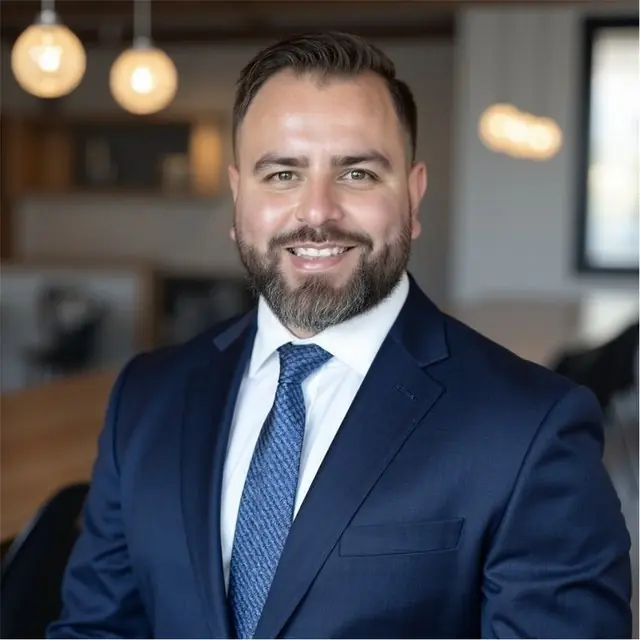
Steven F. Gonzalez
Founder, Gonzalez Capital Group
Newport Beach, California · September 2026